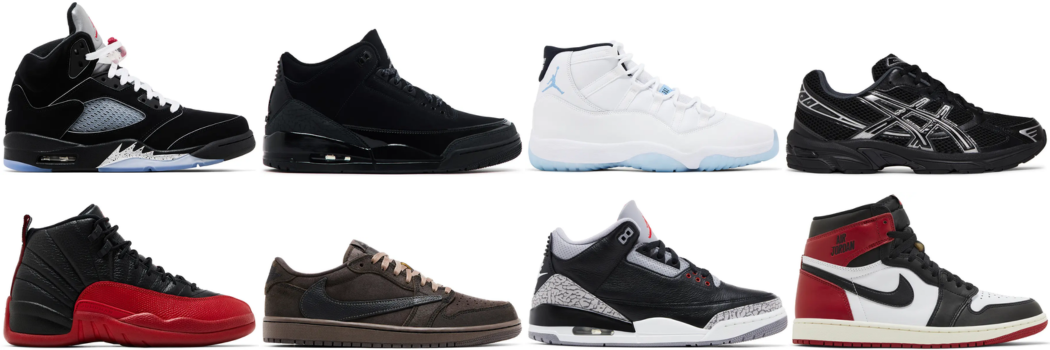
Sole Searching: Unveiling Sneaker Trends with Web Scraping
Using GOAT.com to check out what I should be rocking in March 2025.
More Than Just Shoes
Sneakers are more than just footwear, they’re a cultural phenomenon! Whether it’s the latest Air Jordan drop or a nostalgic re-release, sneaker prices and demand fluctuate based on various factors like release date, hype, and exclusivity. In this project, I used web-scraping to collect data from GOAT, a popular sneaker marketplace, to analyze current trends in sneaker rankings, prices, and release dates. So let’s dive in and see whats popular today and what we should be wearing.
Chasing Trends: What Makes a Sneaker a Hit?
Every sneaker tells a story, but what makes some more valuable than others? This project explores:
- The relationship between sneaker rankings, prices, and release years
- Whether new releases outperform older classics
- Which brands and styles dominate resale rankings (coming soon)
- The most popular colorways right now (coming soon)
Overall my question I want to answer is: what factors are most impactful in the popularity of shoes in the current market?
Ethical Considerations & Web Scraping Best Practices
Before collecting data, I ensured that my scraping practices were ethical and aligned with best practices:
- Checking GOAT’s Terms of Service: I reviewed GOAT’s website policies to confirm that automated scraping was permissible. Since GOAT does not provide an open API, I limited my requests to avoid server overload.
- Respecting Rate Limits: I included a delay between requests to prevent overwhelming the site.
- User-Agent Header: I set a user-agent in my request headers to mimic a real browser, reducing the risk of being blocked.
- Data Usage: My goal was to analyze publicly available sneaker listings for educational purposes only, without redistributing or monetizing the data.
How to Get the Data
For anyone interested in conducting a similar project, here is a breakdown of the web-scraping steps:
- Identify the Target Website: Choose a reliable source like GOAT that provides structured data. I wanted to pick a site that included information of trends, specifically in fashion. This site worked perfectly because the sneakers were already ranked by most popular to least popular.
- Inspect the Website Structure: Use browser developer tools (F12 in Chrome) to inspect HTML elements containing product details. You’ll come back to this step over and over again as you workshop your code.
- Use Python for Web Scraping:
requeststo send HTTP requestsBeautifulSoupto parse HTML and extract relevant informationSeleniumto pull dynamic data
- Extract Relevant Features: I focused on key attributes such as rank, shoe name, price, release date, product link, and am currently working on getting main color and category.
- Store Data in a Pandas DataFrame: This allows for easy analysis and visualization.
- Save Data for Future Use: Export as a CSV for further exploration.
If you want more than just a summary check out my code on Github here!
Summary of the Dataset
My final dataset includes:
- 182 sneakers
- Features: Rank, shoe name, price, release date, product link, main color (if available), and category (if available)
- Missing Data: Some entries lacked information on color and category, which I’m currently working on adding by following each individual product link, stay tuned for new data soon!
Interesting Initial Findings
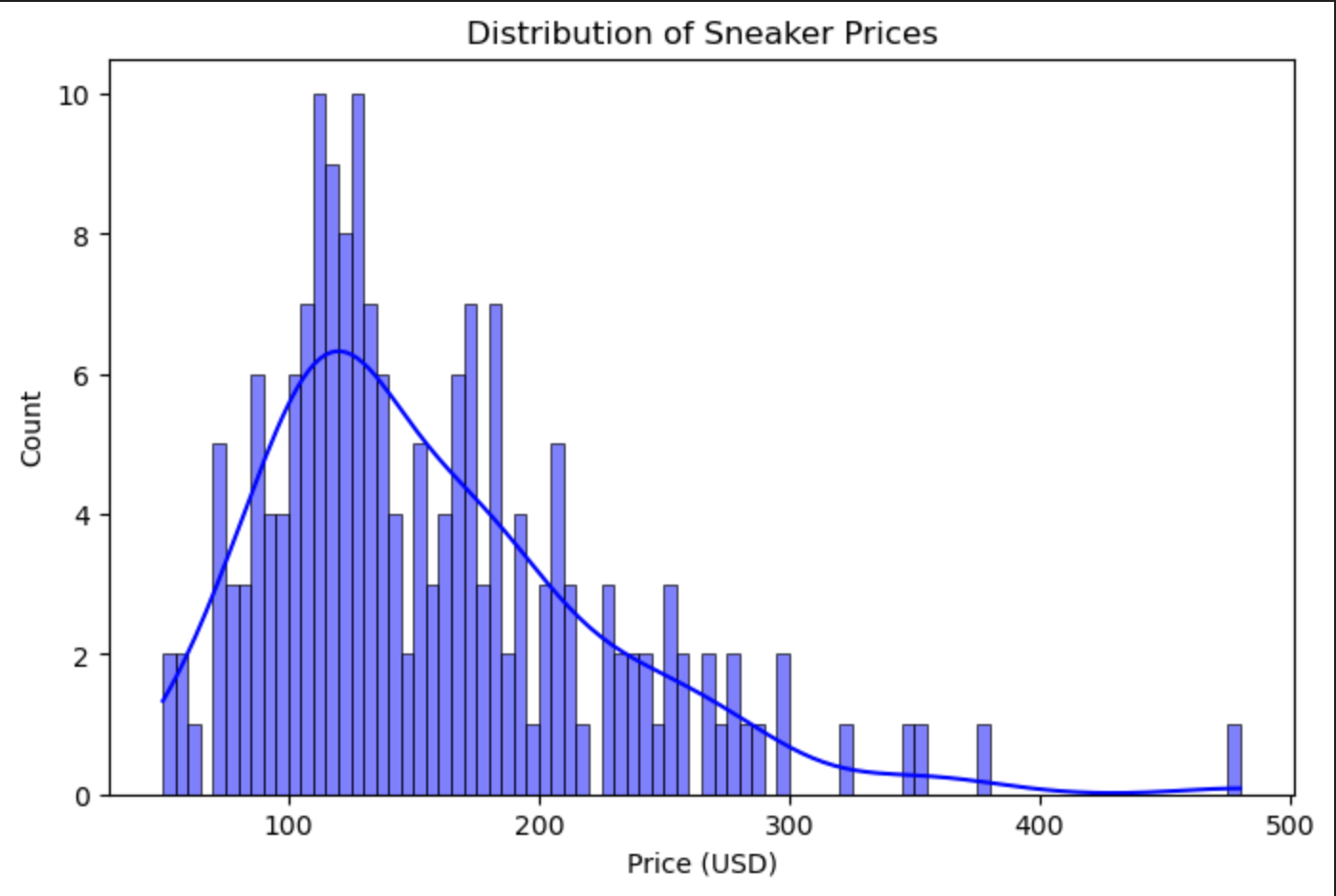
While I’ll be diving into a full Exploratory Data Analysis (EDA) soon, I want to share my initial insights! Sneaker prices in my dataset are all over the place, ranging from a budget-friendly $50 to a jaw-dropping $500. On average, though, you’re looking at about $156.58 for a pair. Most sneakers fall between $110.25 and $189.75, which seems to be the sweet spot for sneaker shoppers. It’s interesting to see how pricing varies, are people paying for the brand, the hype, or the actual shoe quality? I can’t wait to dig deeper and uncover what’s really driving these numbers.
Keep Learning
For those looking to replicate or push this project further, here are a few helpful resources:
- Python Libraries:
requests,BeautifulSoup,Selenium - Web Scraping Guidelines: Scrapy Documentation
- Sneaker Market Insights: GOAT Top 100
Access the Code
Here’s another reminder that you can check out my full code and dataset in my Github Repo.
By following these steps, anyone can gain fun insights to their favorite brands top sellers AND learn a ton about data collection, web-scraping, and simple analysis.